
Published 1st October 2026 · 12 min read
RBA Raises Cash Rate Again: The Impact on Buyers, Sellers and Property Owners
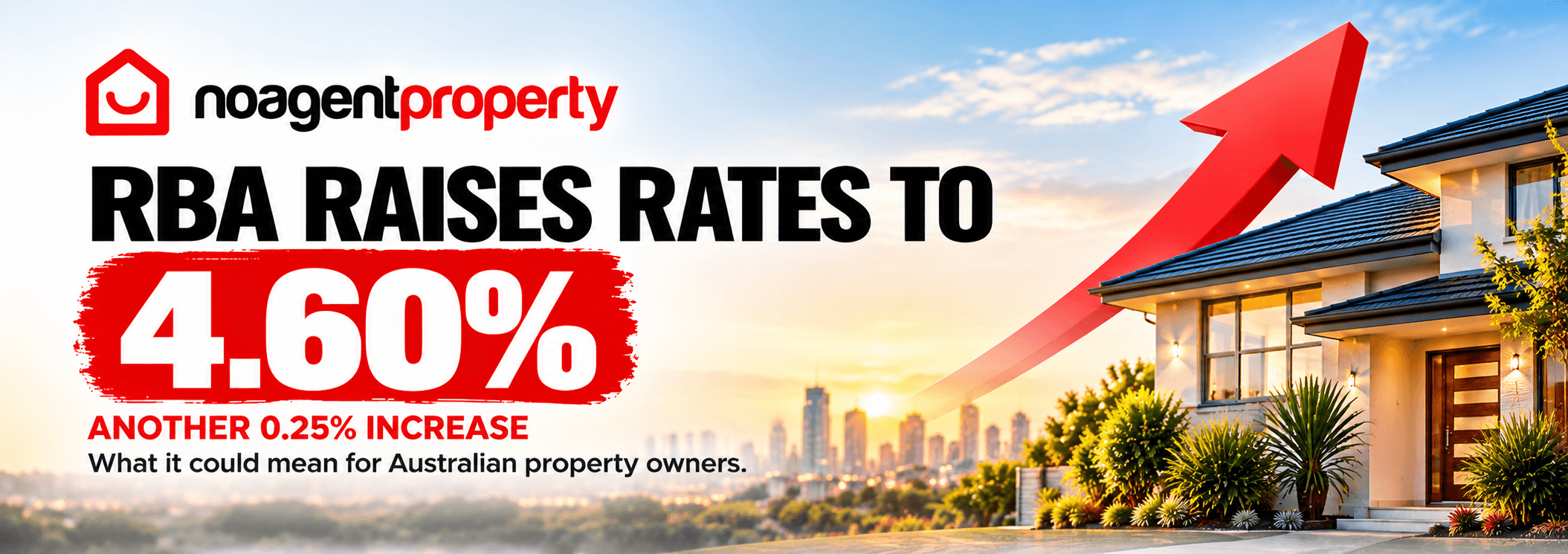
The Reserve Bank of Australia (RBA) has today increased the official cash rate by 0.25 percentage points, taking it from 4.35% to 4.60% (rba.gov.au).

The Reserve Bank of Australia (RBA) has today increased the official cash rate by 0.25 percentage points, taking it from 4.35% to 4.60% (rba.gov.au).
It is the fourth interest rate increase of 2026 and takes the cash rate to its highest level since late 2011 (abc.net.au).
For Australian homeowners, investors, buyers and sellers, another increase raises an important question:
Why has the RBA raised interest rates again?
The RBA uses the cash rate as one of its main tools for managing inflation.
At its previous meeting in August, the RBA held the cash rate at 4.35% after three increases earlier in the year. At the time, it said inflation remained too high and warned that it was prepared to increase rates further if upside risks materialised.
Today, the Board acted again, increasing the cash rate by another 25 basis points to 4.60%.
For households with mortgages, the important point is that the RBA cash rate is not the same as an individual home-loan rate. Each lender determines what it passes on to borrowers. However, when lenders increase variable mortgage rates following an RBA increase, repayments can rise accordingly.
What does the rate rise mean for homeowners?
For homeowners with a mortgage, the most immediate concern will be the potential impact on repayments.
A 0.25 percentage-point increase might appear relatively small in isolation, but 2026 has already brought several increases.
The cash rate was 3.60% at the beginning of the year. Following increases in February, March, May and now September, it has reached 4.60% – a full percentage point higher (abc.net.au).
That cumulative increase matters to households carrying substantial mortgage debt. It can also influence decisions beyond simply refinancing or adjusting household budgets. Some owners may reassess whether a particular property still suits their financial circumstances.
What does this mean for property investors?
For investors, interest rates are only one part of the equation.
Over the past 12 months, our team at No Agent Property has spoken with thousands of Australian property owners considering selling. Some of the recurring issues we hear include:
- Higher interest rates and mortgage costs
- Rising land tax and other holding costs
- Changes to rental regulations
- Portfolio restructuring
- Concerns about future tax and regulatory changes
These were already significant themes among the property owners we were speaking with before today’s rate increase. Another increase in borrowing costs gives mortgaged investors one more reason to review the numbers.
That doesn’t necessarily mean selling. For some investors, holding may continue to make sense. Others may refinance, increase their equity contribution or adjust their investment strategy. Some may decide that selling one or more properties is the better option for their circumstances.
Are buyers still active when interest rates rise?
Higher interest rates can affect buyers as well as sellers. When mortgage rates rise, borrowing becomes more expensive and some buyers may have their borrowing capacity reduced. The latest increase therefore creates another potential affordability consideration for purchasers.
But higher rates don’t mean property transactions suddenly stop. People continue to buy and sell because of employment changes, growing families, downsizing, relocation, investment decisions, separation, retirement and many other circumstances.
In our own experience, buyers don’t necessarily wait for the “perfect” property market.
– No Agent Property team
Will more properties come onto the market?
This is something property owners should watch carefully.
We shouldn’t assume today’s interest rate decision will automatically cause a surge in listings. Australia’s property markets vary considerably between states, cities and regional areas.
However, higher borrowing costs can add to the pressures already causing some investors and homeowners to reconsider their position. Our previous analysis identified interest rates alongside land tax, rental regulation and portfolio restructuring as recurring factors raised by owners considering selling.
If more owners ultimately decide to sell, that could mean greater competition between properties for buyer attention.
Is now a good time to sell?
There isn’t one answer that applies to every property owner. Interest rates are important, but they are only one factor in deciding when to sell. Your decision may depend on:
- Your financial position – can you comfortably continue holding the property if mortgage costs increase?
- Your local market – how many comparable properties are currently available, and what are they actually selling for?
- Buyer demand – what is happening with enquiry and recent sales in your suburb?
- Your reason for selling – are you downsizing, relocating, restructuring investments or simply considering your options?
- Your timeframe – do you need to sell soon, or can you wait?
Rather than trying to perfectly time the market, property owners should consider their individual circumstances and make decisions based on the numbers that apply to them.
One cost property sellers can control
Property owners can’t control the RBA cash rate. They can’t control what their bank does with mortgage rates. And they can’t control exactly what happens to the property market.
But they can control some of the costs involved in selling.
Traditional real estate agent commissions are generally calculated as a percentage of the property’s eventual sale price. Depending on the property value and commission charged, that can amount to thousands or tens of thousands of dollars.
Private selling provides another option. With No Agent Property, owners can advertise their property on major property websites including realestate.com.au and Domain, receive buyer enquiries directly and manage their own sale without paying a traditional percentage-based sales commission.
Sell your property from $798
No Agent Property’s residential selling packages now start from $798. Property owners can:
- ✓Advertise on realestate.com.au and Domain
- ✓Receive enquiries directly from buyers
- ✓Manage their own inspections and negotiations
- ✓Remain in control of their property sale
- ✓Avoid percentage-based real estate agent sales commission
- ✓Access support from the No Agent Property team
What should property owners do next?
Today’s move to 4.60% is another reminder of how quickly financial conditions can change. If you own property, particularly investment property with debt attached, this is a sensible time to review your position.
Look at your mortgage repayments, holding costs, rental return where applicable, the value of your property and recent comparable sales in your area. Then consider whether the property still fits your plans.
For some owners, the answer will be to hold. For others, today’s rate increase may strengthen a decision they were already considering to sell.
And if selling is on your radar, it is worth understanding all of your selling options and their costs before appointing an agent.
Thinking about selling?
For more than 27 years, No Agent Property has helped Australians sell privately. Advertise on realestate.com.au, Domain and other leading property websites, deal directly with buyers and potentially save thousands in agent commission. Residential packages from just $798.
Sources: Reserve Bank of Australia, media release 29 September 2026 (rba.gov.au); ABC News, 29 September 2026 (abc.net.au).
This article is general information only and does not constitute tax, legal or financial advice. Speak with a qualified professional about your specific circumstances.